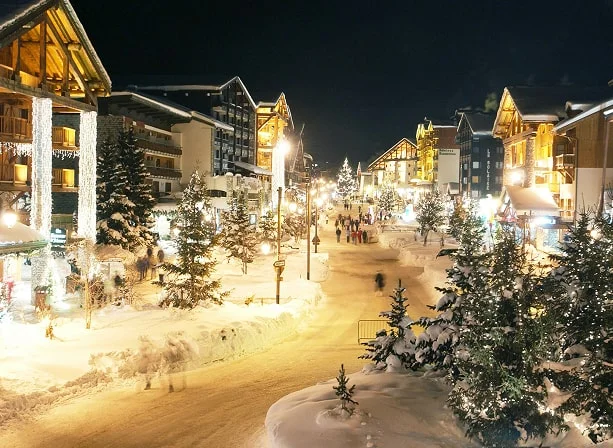
Val d’Isere is located in the Savoie department in the Auvergne-Rhone-Alpes region of southeastern France.
Val d’Isere sits at a base altitude of 1,850 meters (6,066 feet), with the ski area extending up to 3,456 meters at its highest lift.
Val d’Isere is one of the most snow-sure resorts in the Alps, with high-altitude slopes and two glaciers ensuring reliable conditions.
The ski season in Val d’Isere generally runs from late November or early December until the first week of May. In addition, limited weekend skiing may be available in November, and summer skiing is possible on the nearby Tignes glacier in July and August.
The most common way to reach Val d’Isere from nearby airports is by shared or private transfers, with Geneva offering the widest choice of flights and Chambery being the quickest option. Alternatively, you can take a train to Bourg-Saint-Maurice, then continue the final 30 km by bus or taxi to the resort.
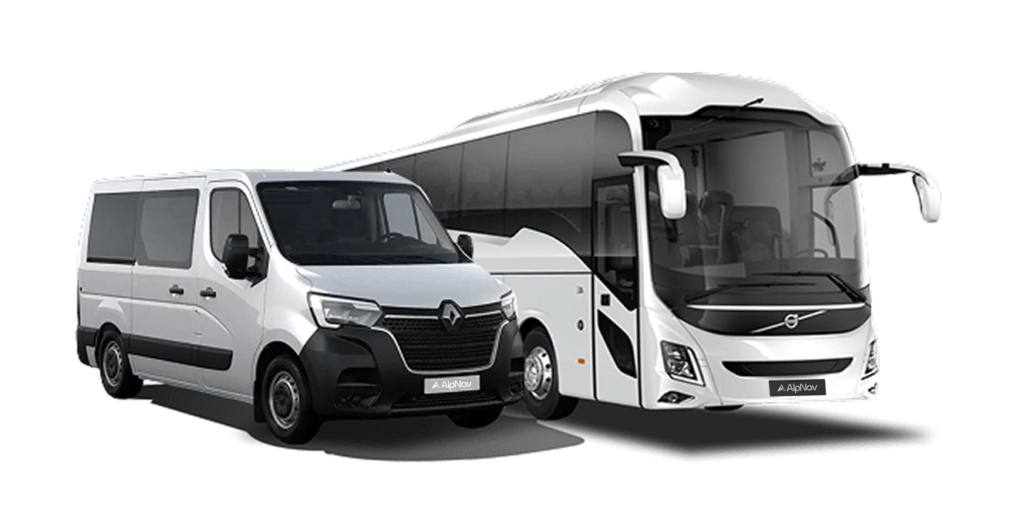
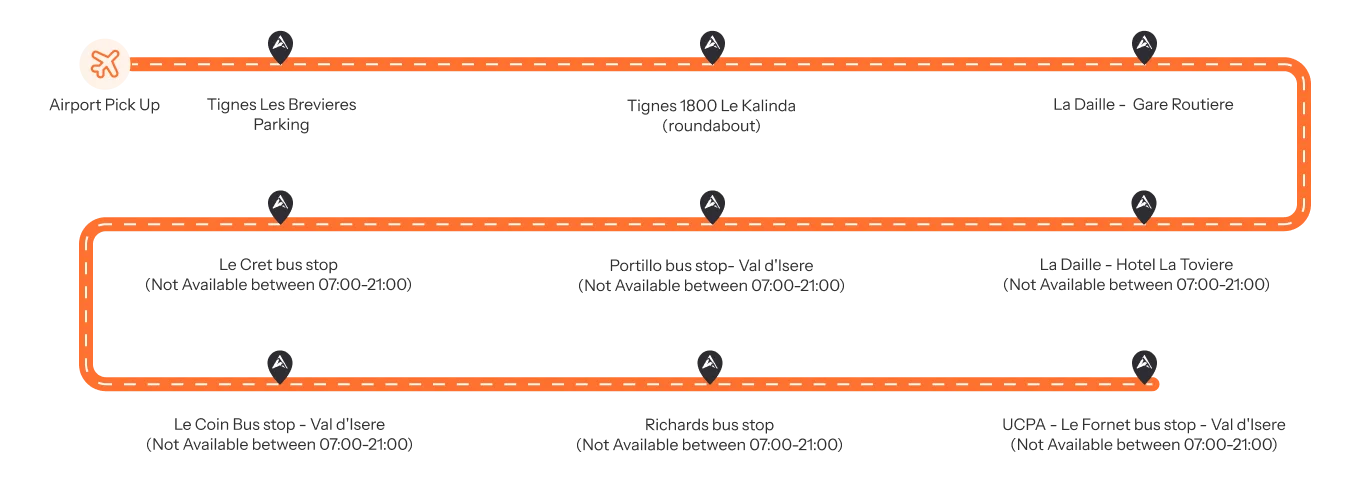
Yes, AlpNav offers both shared and private transfers to Val d’Isere. You can choose a cost-effective shared transfer with multiple drop-off points or a private, with standard or premium vehicles.
The closest train station to Val d’Isere is Bourg-Saint-Maurice, just 30–40 minutes away by road. From there, you can easily continue your journey with a bus, taxi, or private transfer directly to the resort.
The Val d’Isere bus station is now located in La Daille at the entrance to the village. From there, passengers can take the free Red Line shuttle into the village center. This has been designed to offer greater comfort and manage visitor flows more efficiently.
The main bus station in Val d’Isere has been relocated to La Daille, starting from the 2024/2025 winter season. Travelers now arrive and depart from this new hub, with free Red Line shuttles connecting to the village center.
Yes, Val d’Isere provides a free and reliable shuttle bus service that runs daily throughout both the winter and summer seasons, linking all villages from La Daille to Le Fornet. Three main routes (Red, Yellow, and Blue) operate frequently during the day and into the evening, offering an eco-friendly way to get around without needing a car.
The free "Train Rouge" shuttle in Val d’Isere runs frequently, with departures every 10 minutes from La Daille between 7:00 AM and 7:50 PM, and every 20 minutes until around 2:10 AM. It connects La Daille with Le Fornet, stopping at key points including the Rond-Point des Pistes.
Yes, Val d’Isere’s electric shuttles are built to operate reliably in winter, even in extreme cold, with features like advanced battery thermal control and robust heating systems. The resort has been introducing electric buses since 2022 and aims for a fully electric fleet by 2026, demonstrating its commitment to sustainable, dependable transport during the ski season.
Yes, public transport arrivals to Val d’Isere now use the La Daille bus station, the main drop-off for regional coaches and shuttles. From there, passengers can take the free "Train Rouge" (Red Train) to reach the village center.
Val d’Isere is accessible to coaches only between 21:00 and 7:30 AM, as access is restricted between 7:30 am and 21:00.
If your accommodation in Val d'Isere is far from a bus stop, you should use the resort's free shuttle bus service to reach the nearest stop, which can then take you to various parts of the resort. You can also walk to a more convenient stop, arrange for a taxi, or potentially use a private transfer if available from your accommodation.
Val d’Isere provides several family-friendly transport options, including a free village shuttle and free lifts to beginner slopes. For longer trips or specific needs, taxis are available, making it easy for families to access child-friendly activities and ski areas.
Yes, the village shuttles in Val d’Isere are free and operate year-round to help reduce car traffic. They connect all areas and hamlets of the resort, making it easy for visitors to reach ski slopes and local amenities.
Val d’Isere has a white road policy, which means the roads in the village are often covered in snow. You may need snow chains in certain conditions, so be prepared with them or ensure your vehicle has snow tires.